The Root Cause
Why your blood sugar
won't stabilize —
and how to finally fix it.
You've been taking Metformin. You've been watching your carbs. You've been pricking your finger every morning and adjusting your whole life around those numbers.
And after all of that — your glucose still spikes. Your energy still crashes by 2 p.m. Your doctor still says: "We might need to increase the dose."
If Metformin was the answer, your numbers would have stabilized years ago. So why hasn't it worked?
Because Metformin works on blood sugar after it's already in your bloodstream. It never touches the source.
The Source Is Called Pancreatic Sludge.
Inside your pancreas are millions of specialized cells — tiny insulin factories. When they work correctly, your blood sugar stays balanced automatically. You eat. You feel good. You move on.
But every single day, you're exposed to pesticides, microplastics, and industrial chemicals — in your water, your food, your air. The average American absorbs over 80,000 synthetic chemicals per year.
Your body can't flush them fast enough. So they accumulate. They thicken. And over time, they form a sticky toxic layer that coats your pancreas from the inside — suffocating your insulin factories and blocking the signal that controls your blood sugar.
That's pancreatic sludge. And no amount of Metformin can reach it.
⚠️ A study published by the National Institutes of Health in September 2024 confirmed that continuous exposure to pesticides, plastics, and industrial chemicals creates chronic metabolic stress — and destroys pancreatic function over time.
The Missing Master Switch: GLP-1
In a study of 74 pairs of identical twins — same DNA, same upbringing, same food — one twin had type 2 diabetes. The other was perfectly healthy.
Researchers analyzed everything. Blood markers. Hormone levels. Cellular function. They found one difference.
The healthy twins had GLP-1 levels 312% higher than their diabetic siblings.
GLP-1 is your body's metabolic master switch. It dissolves pancreatic sludge at the cellular level. It tells your brain when you're full — eliminating cravings. And it restores metabolic flexibility, so your energy stays stable all day instead of crashing after every meal.
When GLP-1 is high, your body clears the sludge, controls your appetite, and keeps your blood sugar stable — almost effortlessly. When it's low, you're fighting an uphill battle you were never designed to win.
🐻
What Bears Know That Your Doctor Doesn't.
Before hibernation, a bear eats up to 20,000 calories a day — gorging on honey, berries, and pure sugar. Then sleeps for 6 months without moving.
By every medical standard, that bear should wake up severely diabetic. But it doesn't. It wakes up with perfect blood sugar.
How? Bears produce over 5,000 times more GLP-1 than the average human. And researchers discovered they instinctively seek out honey with the highest concentration of MGO — the exact compound that triggers GLP-1 production.
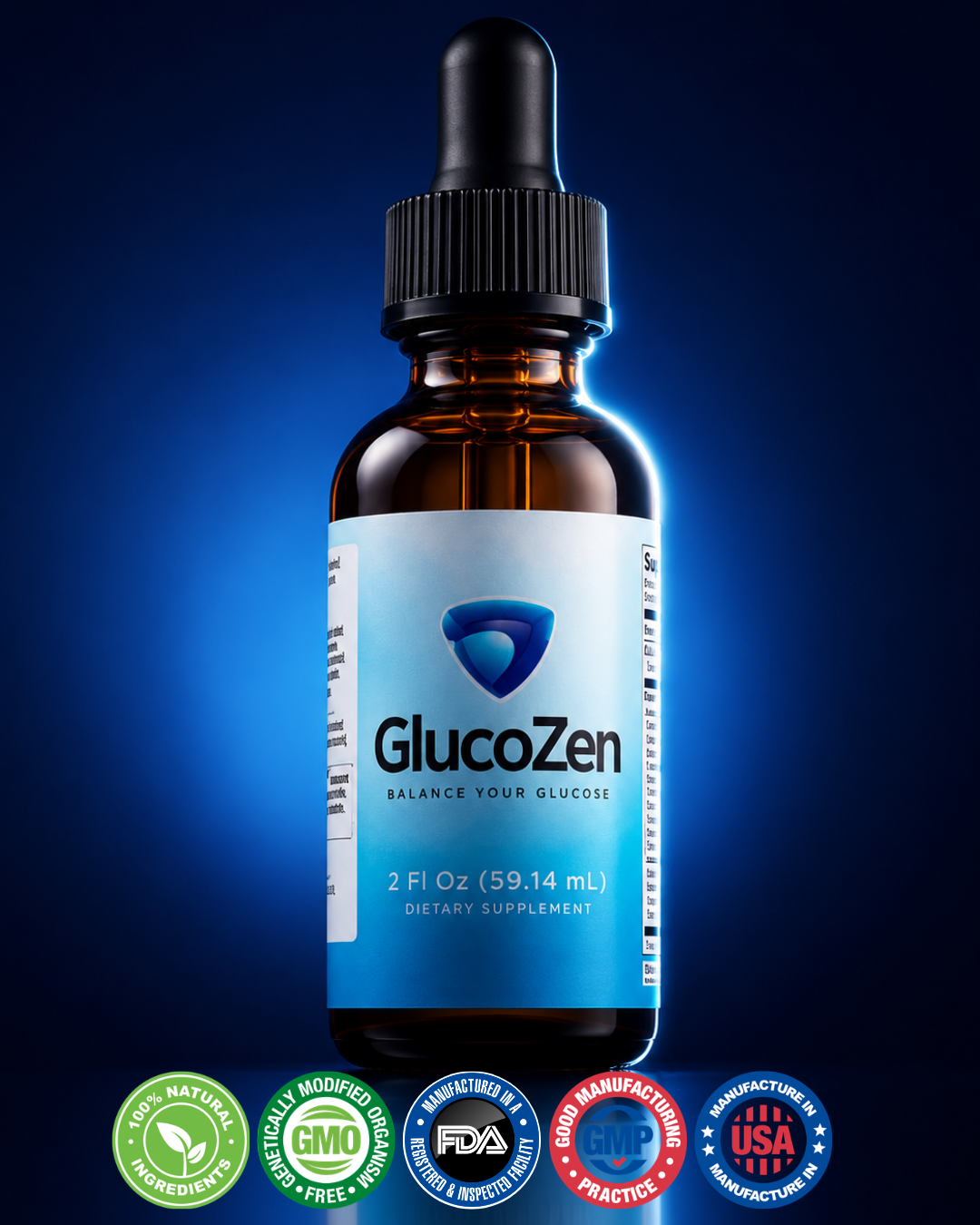
Nature already solved this problem. GlucoZen delivers the solution.
Clinical Trial Results — 1,632 Participants · 12 Weeks
97%
of participants increased natural GLP-1 production by 312%
96%
dropped their A1C by 1.5+ points in 12 weeks
83%
reduced or completely eliminated their diabetes medication